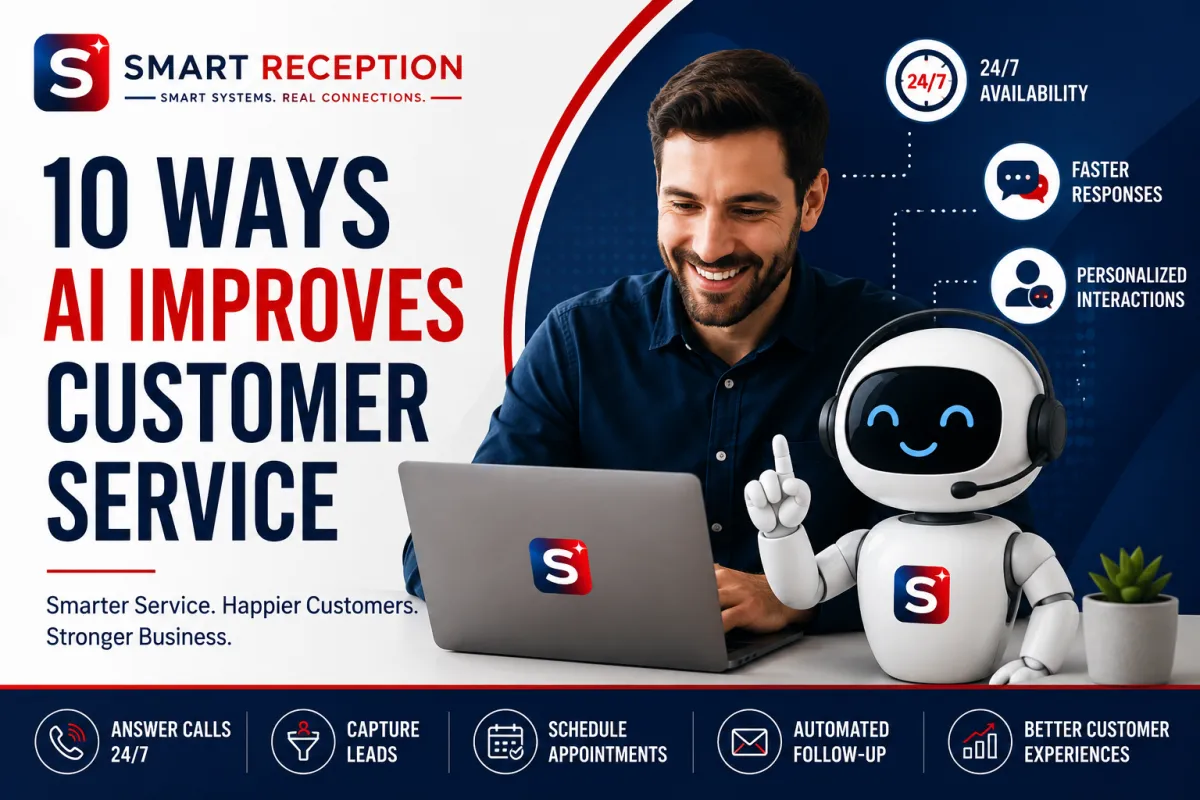
10 Ways AI Improves Customer Service for Small Businesses
AI Customer Service, Small Business Support, Customer Experience Improvement
10 Practical Ways AI Improves Customer Service for Small Businesses
(Without Replacing Your Team)
AI Customer Service is no longer just for big brands. Today, small businesses and agencies can use affordable AI tools to answer questions, book appointments, capture leads, and follow up with customers automatically. The goal is not to replace your team, but to give them powerful support so they can focus on high-value, human conversations that grow your business.
Why AI Customer Service Matters for Small Business Support
For many small businesses and agencies, customer service is a constant balancing act. You want to respond quickly, be available when customers need you, and deliver a great experience—yet you also have limited staff, limited hours, and limited budget. This is where AI Customer Service becomes a strategic advantage. Properly implemented, AI tools extend your capacity, handle routine tasks, and keep communication flowing, while your people focus on empathy, problem-solving, and relationship-building.
Below are 10 practical ways AI can improve customer service for small businesses and agencies, centered on support, not replacement. Each approach directly contributes to Customer Experience Improvement while protecting your team from burnout and constant multitasking.
1. 24/7 Availability: Always-On Support Without Always Being “On”
Customers now expect answers at any hour—whether they find your business during a late-night search or have a question on a weekend. For small businesses, staffing a 24/7 phone line or live chat is unrealistic. AI changes that by providing 24/7 Availability across your website, social channels, and even phone systems, without adding full-time staff or overtime costs.
An AI chatbot or voice assistant can handle common questions—opening hours, pricing, services, directions, basic troubleshooting—anytime a customer reaches out. When the AI can’t resolve something, it captures the details and hands them to your team to respond during business hours. You stay responsive around the clock, while your people still enjoy normal working schedules. This blend of AI Customer Service and human expertise is especially powerful for local service businesses, clinics, salons, and agencies that want to appear “always open” without actually being on-call 24/7.
2. Faster Response Times: From Minutes or Hours to Seconds
Response time is one of the biggest drivers of Customer Experience Improvement. When customers wait too long for an answer, they often move on to a competitor. AI dramatically reduces that waiting period. Instead of sitting in an overflowing inbox or voicemail box, questions are answered instantly by an AI assistant, or at least acknowledged and routed properly within seconds.
For agencies and small teams, this is especially valuable during busy periods. AI can triage incoming messages, provide instant answers to simple requests, and flag urgent issues for your staff. Your customers feel heard immediately, and your team gets a prioritized list of conversations that truly need a human touch. Faster response times build trust, reduce frustration, and show that your business respects the customer’s time—even when your staff is in meetings, on job sites, or serving other clients.
3. Answering Calls: Never Miss Another Opportunity
Missed calls are missed revenue. Yet many small businesses simply cannot afford a full-time receptionist, especially across multiple locations or time zones. AI-powered phone agents step in as a reliable first line of contact, answering calls when your team is busy, after hours, or on holidays. Instead of sending customers to voicemail, AI can greet them professionally, answer basic questions, and direct them to the right next step.
For example, an AI system can answer a call, confirm your business hours, explain core services, book an appointment, or record a detailed message with context. When your staff returns, they see a clear summary of who called, what they needed, and any actions already taken. This approach keeps your phone line active and responsive, while freeing your team from constantly juggling calls during peak times. It is Small Business Support in a very practical, day-to-day sense: you stop losing opportunities simply because no one could reach the phone in time.
4. Capturing Leads: Turning Every Interaction into a Business Opportunity
Many small businesses drive traffic to their website or social media, but struggle to capture those visitors as leads. People browse, ask a quick question, and disappear. AI Customer Service tools help convert more of those casual interactions into real opportunities by consistently asking for contact details at the right moments and logging them into your CRM or lead management system automatically.
For instance, when someone asks about pricing or availability in chat, the AI can naturally say, “I can send you detailed options—what’s the best email or phone number to reach you?” When a caller asks about a quote, the AI can collect their name, project details, and preferred contact method before passing the lead to your team. This consistent lead capture means your staff spends less time on repetitive data entry and more time on meaningful follow-up conversations. Over time, you build a richer database of warm prospects, improving marketing results and sales efficiency without adding extra manual work.
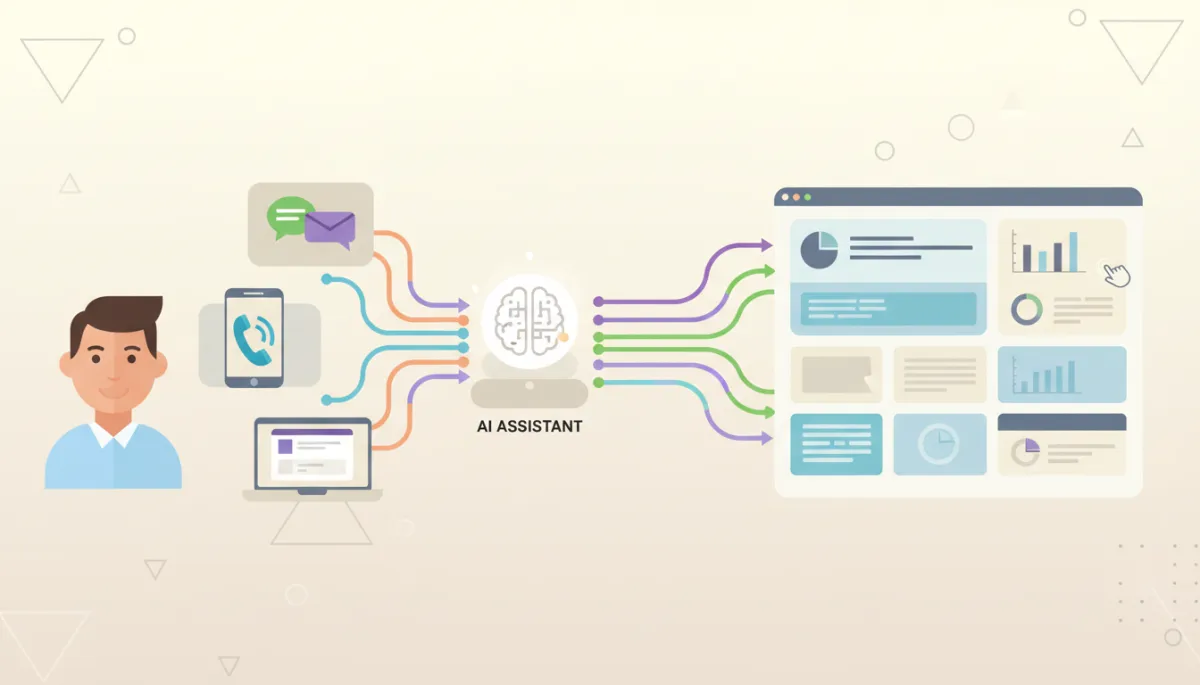
Centralized AI capture turns scattered calls and chats into organized, actionable leads.
5. Appointment Scheduling: Fewer Back-and-Forth Messages, More Booked Slots
Booking appointments is a classic time drain for small businesses and agencies. The back-and-forth of “Does Tuesday at 3 p.m. work?” quickly eats up your team’s day. AI scheduling assistants streamline this process by connecting to your calendar and offering real-time availability to customers via chat, SMS, or phone. Customers can choose a time, receive a confirmation, and even reschedule—without requiring a staff member to manage every step manually.
This approach not only saves time, it also reduces no-shows. AI can send automatic reminders, allow quick confirmations, and offer easy rescheduling links. For salons, clinics, consulting firms, and agencies, this means fuller calendars, fewer empty slots, and less administrative stress. Your team still controls the rules—such as available hours, buffer times, and appointment types—but the AI handles the repetitive scheduling tasks that previously clogged your inbox and phone lines.
6. Consistent Communication: One Voice, Many Channels
As your business grows, keeping communication consistent across phone, email, chat, and social media becomes harder. Different team members may use different wording, forget key details, or miss steps in your process. AI helps standardize your customer communication so that every interaction reflects the same tone, accuracy, and brand message—no matter who is on duty or which channel the customer chooses.
You can train AI systems with approved answers, FAQs, and brand guidelines. When customers ask about pricing, policies, or services, the AI responds with the same clear, up-to-date information every time. For your staff, this means fewer “What should I say here?” moments and less risk of miscommunication. AI can also provide suggested replies for human agents, helping new employees ramp up faster and seasoned team members stay on-message. The result is a smoother, more reliable experience that customers quickly learn to trust.
7. Personalized Interactions: Treat Every Customer Like a Regular
One of the biggest benefits of AI Customer Service is the ability to deliver Personalized Interactions at scale. Small businesses often pride themselves on knowing their customers by name and remembering their preferences. AI extends that personal touch to digital and phone channels by using data you already have—past purchases, previous conversations, preferences, and behavior—to tailor each interaction.
For example, an AI assistant can recognize a returning customer by their email or phone number and say, “Welcome back, Sarah. Would you like to book the same service as last time?” It can suggest relevant products, remember communication preferences, or reference earlier support requests. When your human team steps in, they see this context immediately, making it easier to continue the conversation in a natural, informed way. Personalized Interactions help customers feel valued and understood, which is a powerful driver of loyalty and repeat business.
8. Automated Follow-Up: Staying in Touch Without Constant Reminders
Many customer relationships fade simply because no one remembered to follow up. After a quote, a consultation, or a service visit, your team intends to check in—but other priorities get in the way. AI-driven Automated Follow-up ensures that thoughtful, timely messages go out consistently, without relying on manual to-do lists or sticky notes on a monitor.
You can set up AI workflows that send follow-up messages after key events: a new lead inquiry, a missed call, a completed appointment, or a product purchase. These messages can thank the customer, ask for feedback, suggest next steps, or offer helpful resources. Importantly, AI can personalize these follow-ups based on what the customer actually did or requested, instead of sending generic, one-size-fits-all templates. This kind of Small Business Support keeps your brand top-of-mind and shows customers that you care, even when your team is fully booked with active projects.
9. Reduced Workload: Giving Your Team Time to Do Their Best Work
One of the most practical benefits of AI Customer Service is workload reduction. Instead of trying to replace your employees, AI is best used as a digital teammate that handles repetitive, low-complexity tasks. Answering the same basic questions, entering the same data, confirming the same details—these are important but time-consuming activities that often drain your staff’s energy and attention.
When AI takes over these tasks, your team can focus on what humans do best: building trust, handling nuanced situations, solving complex problems, and creating memorable experiences. This shift reduces burnout, improves morale, and helps you retain talented employees. For agencies, it also means your specialists can spend more time on strategy and creative work, rather than administrative back-and-forth. Reduced workload does not mean fewer people; it means your existing people can operate at a higher level, supported by smart automation in the background.
10. Better Customer Experiences: Turning Every Touchpoint into an Advantage
Ultimately, all of these capabilities—24/7 Availability, faster response times, answering calls, capturing leads, appointment scheduling, consistent communication, Personalized Interactions, and Automated Follow-up—contribute to one core outcome: better customer experiences. When customers can reach you easily, get quick and accurate answers, and feel remembered and supported, they are far more likely to return, refer others, and leave positive reviews.
AI also provides valuable data about what customers ask, where they get stuck, and what they care about most. You can analyze chat transcripts, call summaries, and support trends to refine your services, adjust your messaging, and improve your processes. This ongoing Customer Experience Improvement is especially important for small businesses and agencies competing against larger brands. With AI, you can deliver a polished, responsive, and personalized experience that feels anything but “small.”
How to Introduce AI Customer Service Without Losing the Human Touch
While the benefits are clear, many business owners worry that AI will make their customer service feel cold or robotic. The key is to position AI as the first layer of support, not the only layer. Customers should always have a path to reach a real person, especially for sensitive, complex, or high-value issues. Think of AI as your front desk: it greets, guides, and gathers information, then hands off to your team when needed.
Start small by identifying one or two areas where your team feels the most pressure—perhaps after-hours calls, repetitive FAQs, or appointment booking. Implement AI there first, measure the impact on response times and workload, and gather feedback from both customers and employees. Over time, you can expand AI’s role to other channels and tasks, always keeping the focus on Small Business Support and human-centered service rather than full automation for its own sake.
💡 Pro Tip: Be transparent with customers when they are interacting with AI and make it easy to say, “Talk to a human.” This builds trust and keeps your experience honest and customer-friendly.
Practical Next Steps for Small Businesses and Agencies
If you are considering AI Customer Service solutions, begin with a clear goal. Do you want to reduce missed calls, shorten response times, increase lead capture, or free up your team from repetitive tasks? Choose one or two measurable outcomes and evaluate tools based on how well they support those goals. Look for platforms that integrate with your existing systems—CRM, calendar, phone, or helpdesk—so information flows smoothly between AI and your human team.
Involve your staff early in the process. Ask them where they feel overwhelmed, which questions they answer most often, and what kind of support would make their day easier. When employees see AI as a partner that removes friction from their work, adoption is smoother and the results are stronger. For agencies, consider how AI can help you deliver higher-quality service to your clients as well—by managing inbound inquiries, supporting client campaigns, or providing white-labeled AI assistants that enhance your service offerings.
Conclusion: AI as a Service Partner, Not a Replacement
AI is reshaping customer service, but for small businesses and agencies, its most powerful role is as a supportive partner. By providing 24/7 Availability, faster responses, reliable call handling, smarter lead capture, and effortless appointment scheduling, AI removes friction from every stage of the customer journey. By ensuring consistent communication, enabling Personalized Interactions, and powering Automated Follow-up, it helps you deliver a polished, dependable experience that feels personal—not generic or automated.
Most importantly, AI reduces workload on your team so they can focus on the human side of service: listening, advising, empathizing, and building trust. The result is better customer experiences, happier employees, and a stronger, more resilient business. When you view AI Customer Service as a tool for Small Business Support rather than a replacement for human talent, you unlock a competitive edge that is both practical and sustainable. The future of customer service is not AI or humans—it is AI and humans, working together to serve your customers better than ever before.